Madeleine Laferriére
by Parker Ahmad
What did the women of Liberty Hall have in common with Queen Maud of Norway and Alexandra of Denmark, later the Queen of England? Turns out, they had the same interest in fashion designers, specifically Madeleine Laferrière. While not much is well known about her to American fashion consumers today, she was highly influential during her life. In fact, her name – and her design house Maison Laferrière – was one of the most prestigious names in fashion and was sought out by the French aristocracy and European Royalty. At Liberty Hall, our costume collection holds a Maison Laferrière manteau that dates from the 1890s.
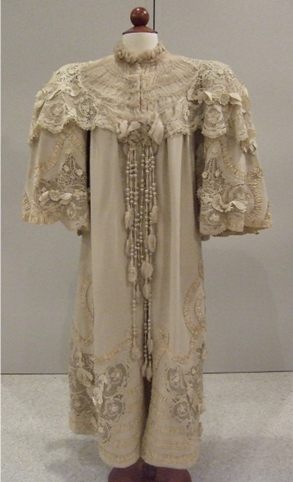
Manteau – which is French for coat, overcoat – is a type of loose overcoat that any woman would have owned at this time. While the silhouettes change with time, they can often be identified by their boxy, but fluid shape. This fashion item was quite ubiquitous as they could be worn for many different purposes. They would have been worn over a dress and could be utilized in a variety of occasions from casual walks around town to formal evening events. As an outer garment, a manteau may have been highly ornamented, like the one we see in Liberty Hall’s collection, or may have been more simple with little to no ornamentation. These coats were extremely versatile and fashionable.
Through analyzing this piece, it becomes clear that Laferrière was devoted to quality and luxury. The body of this manteau is made from wool, lined in a light-weight silk chiffon and silk satin. The lace panels and flowers are made from cotton, while the decorative swirls are made using the same silk satin as the lining. Laferrière’s designs were intricately executed with high quality textiles and finishings, proven through this object. No wonder royalty and the ladies of Liberty Hall were so attracted to her designs.
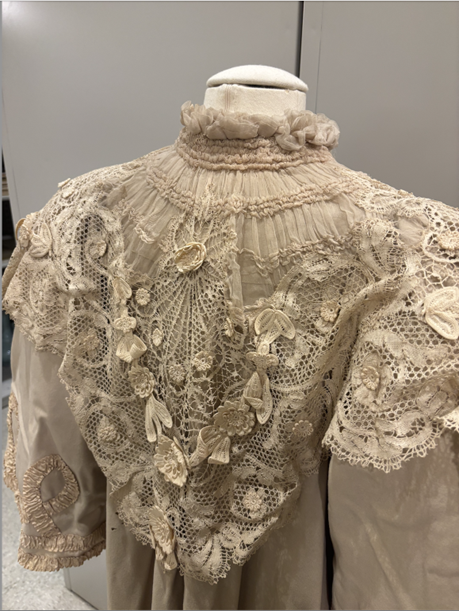
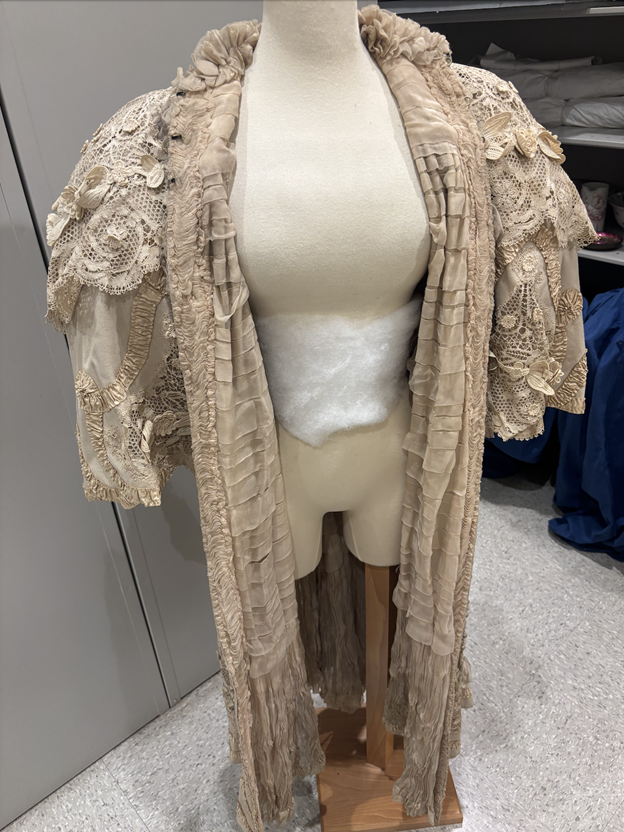
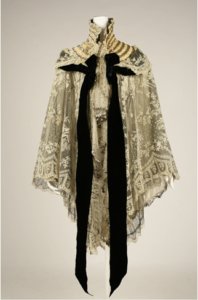
However, not too much is known about Maison Laferrière and Madeleine Laferrière’s career outside of her famous clientele. What can be deciphered is that she started her business around the late 1860s, around the same time many other famous couture designers, such as Jeanne Paquin and Charles Fredrick Worth, were starting their businesses. Laferrière, therefore, would have been integral to the development of the couture business through her fashionable, quality designs and clientele. While Maison Laferrière pops up a few times in the 1920s and 1930s in print media, it is believed that she died in 1912, and had been working up until her death. Laferrière’s designs were perfectly crafted with high quality textiles, finishings, craftsmanship, and beauty; making them exemplary examples of the beginnings of couture.
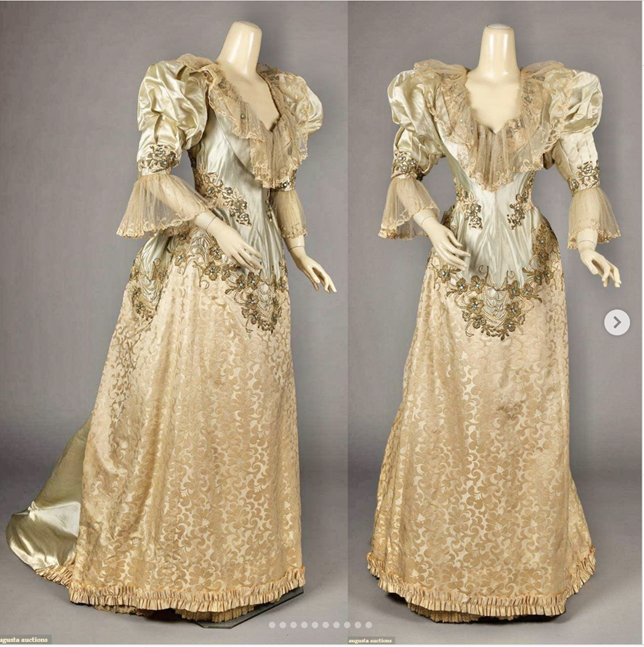
To the American customer base, Maison Laferrière was advertised as “Patented Furnisher to H.R.H the Princess of Wales,” meaning Maison Laferrière was advertising themself as one of the main fashion designers for Princess Alexandra (later Queen Alexandra 1901-1910) to draw in potential new customers.
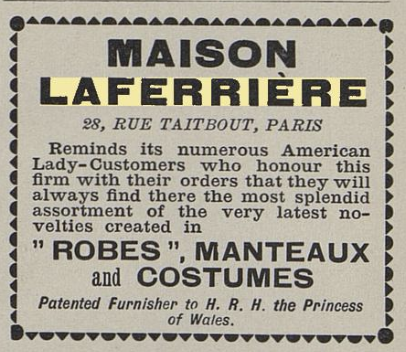
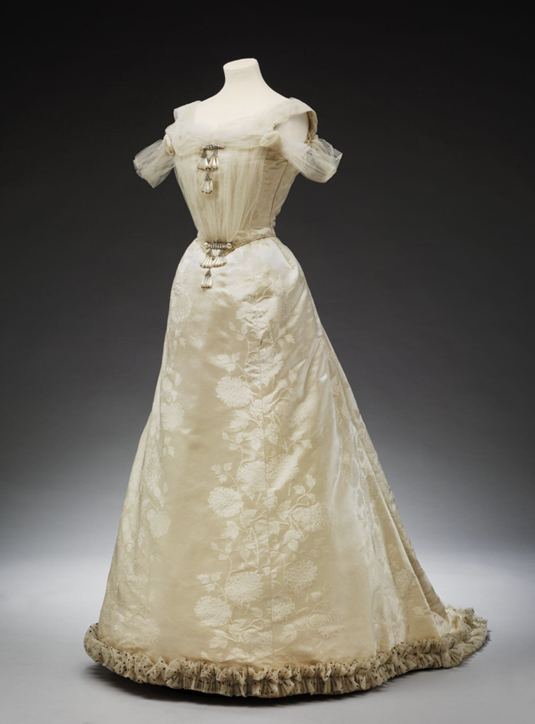
Having customers such as the Princess of Denmark does not mean that American women did not have access to Laferrière’s merchandise, and it is clear through this advertisement that they were interested in expanding their customer base in the United States. However, the American customers would have had a different experience obtaining Laferrière’s designs. Someone would have had to travel to France, where they would be able to purchase one of Laferrière’s designs at her store located at 28 Rue Taitbout in Paris.
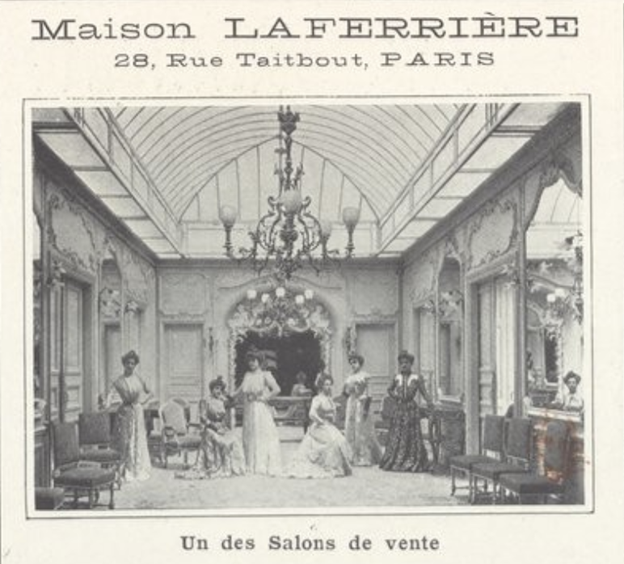
They could have also visited “exhibitions” of her pieces and made orders for the ones they wanted there. Based upon receipts found in the archives, the Keans most likely purchased this manteau in their store at 28 Rue Taitbout during one of their many trips to Paris.
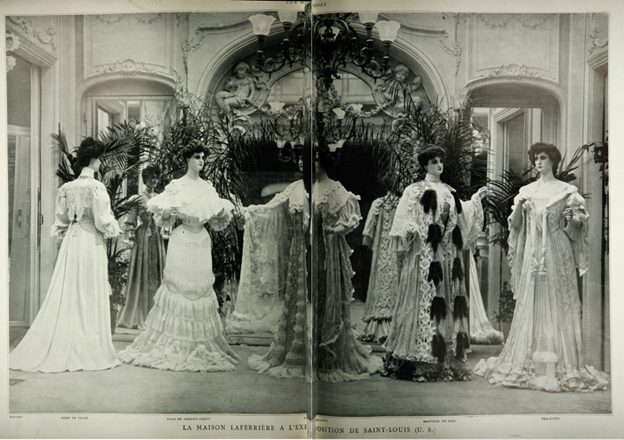
Having the opportunity to study this manteau only allows for more research on an understudied designer and brings more light to her abilities. Madeleine Laferrière’s pieces truly exemplify fashion of the time. Her garments were the epitome of luxury and provide an example of how important quality textiles and finishings were during the Victorian into the Edwardian Eras. This also allows us to learn more about the Kean woman who would have worn it and what their fashion interests were. This manteau allows us to not only study an under researched designer, but also to help us learn more about how the Keans fit into the narratives of luxury and couture fashion.