How to Date a Jeanne Pacquin Bodice
by Parker Ahmad
Dating garments can be a challenging task for historians. Sometimes there are recognizable silhouettes and styles that define a certain time – think power suits and shoulder pads from the 1980s – whereas other times an object could be so elusive it could be modern or historic. But what would a historian do if an object was altered and pieces of the original garment were missing? This is a challenge that I am facing with a Jeanne Paquin bodice that lives in the Liberty Hall costume collection.
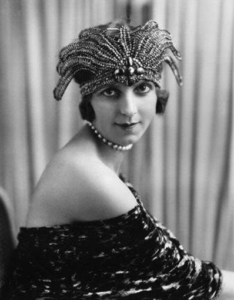
Jeanne Paquin was a French couture designer who helped to define the couture industry to what it is today. Paquin and her husband founded their business in 1891 and shortly after their marriage on February 28 of the same year, Madame Paquin became the head designer. The House of Paquin quickly became established as a favorite courtier amongst the French aristocracy, alongside other famed designers such as Charles Fredrick Worth. Paquin’s designs were crafted to perfection, mixing youth and couture that was attractive to actresses and royalty all over the world. The Paquins had couture houses in both Paris and London, where they would have their seamstresses in house ready to create any piece. Madame Paquin was also one of the first French designers to believe in the American customer base, bringing copies of her pieces to New York to show them, something that designers like Christian Dior would come to do and be credited with fifty years later. Through being ahead of her time, Madame Paquin brought a new air to couture through her intricately designed pieces that exemplified the beauty of fashions of the time.
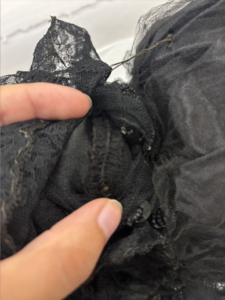
When looking at this bodice, what stumped me was why the Paquin label was covered by a piece of boning. Boning is a piece of hard material – sometimes baleen from whales, sometimes thin pieces of wood, or even steel – that would give the bodice the structure. The interior boning would work in conjunction with the corset to achieve the ideal body silhouettes that help to define fashion eras.
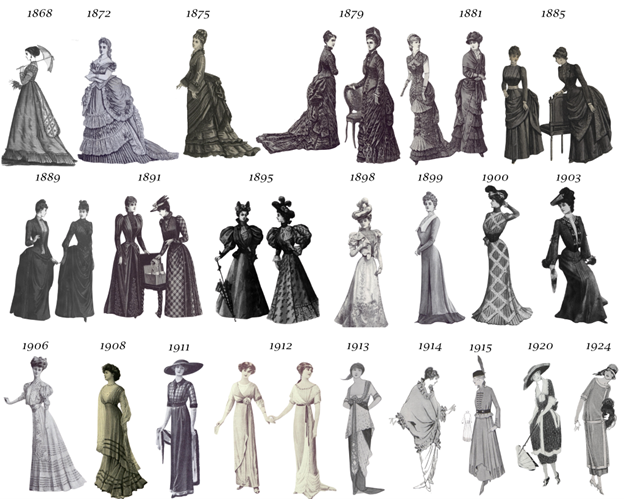
In most cases, the label and waist tape would be the last things added to a garment, so the boning would be under the label rather than over it. This caused some questioning of this piece as to why the boning would be over the label. At first, it was thought that maybe the original boning deteriorated or was damaged, so it was replaced by adding a new piece. But then more questions started to arise, including clear changes that were made to length the neckline.
When I took a deeper look into the construction of the garment, I noticed that the bodice had been completely altered from its original form. What initially made me realize this was the difference in the execution of the stitching, different fabric usage, and a raised neckline. On the original bodice, all the edges had been finished, whereas on what appears to be the added parts, the edges were left raw or sloppily finished. Then I moved onto the materials. I noticed that the original parts of the bodice were a twill fabric, whereas the added parts were a satin fabric.
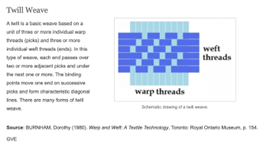
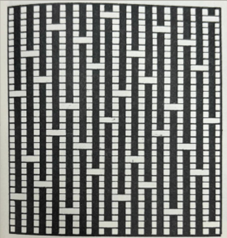
Mixing and matching fabrics would have been normal to create visual interest in the garment; however, in this situation it is an odd pairing. The fact that the main portion of the bodice and the neckline were two separate fabrics made me realize that it had been altered from its original form, making this piece truly one of a kind.
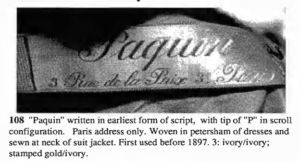
This raises the question of how do you date a piece that has been altered from its original form? One way you can do this is through looking at the labels. Labels often change as a company grows, and in the case of Paquin, they did. According to fashion historian Jan Glier Reeder in her graduate thesis, the gold and ivory label we see on this piece was used before 1897, as starting in 1897 the labels included both the Paris and London addresses. We can then make the claim that the original bodice most likely pre-dated 1897, as the label only has the Paris address. To determine when the original bodice was from it becomes challenging as many of Paquin’s designs and sketches that still exist are from 1897 onwards, making the original bodice an astonishing piece from her early designs.
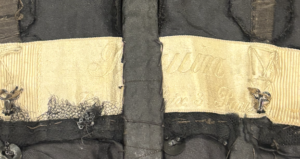
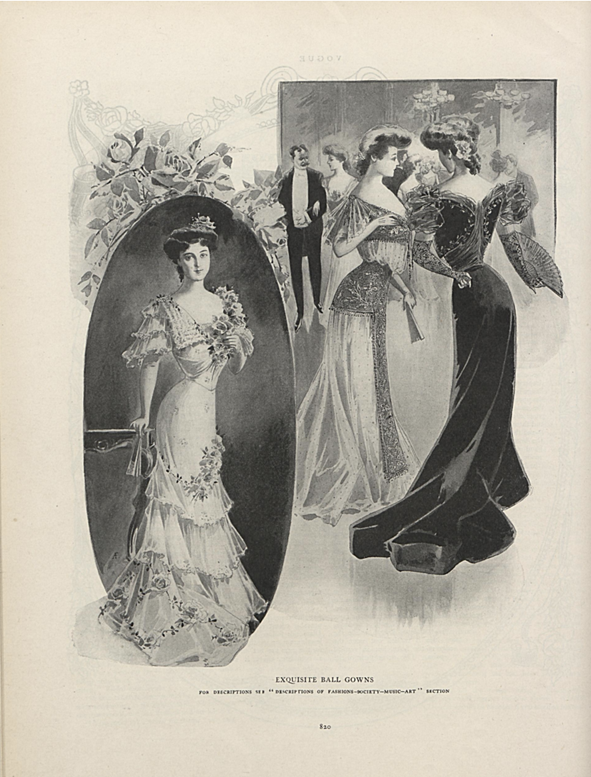
While we cannot determine why the owner of the bodice may have altered it so significantly, one could conjecture it may have been to update an outdated style to a newer, more modern one. In addition to the neckline being altered, the sleeves had also been switched out. We can tell this again as the fabric of the sleeves matches the fabric used to lengthen the neckline and the fact that the point at which the sleeves are attached does not have finished edges. Finished edges are a hallmark of quality garments, so the fact that these were left unfinished is a clear example of work being done outside the couture house. Sleeves were also an ever changing aspect of fashion during the 1890s through to the early 1900s. The 1890s were almost defined by their “leg-of-mutton” sleeves, while in the early 1900s they lost a bit of their volume and started to straighten out. Through 1902 to 1904, this type of puffed sleeve was prominent and was very clearly defined in Paquin’s sketches. While there is still volume to the sleeve it is much less than the volume seen in “leg-of-mutton” style. Therefore, it can be determined that the most likely possibility for altering this bodice was to update the outdated 1890s style to the more modern 1902-1904 style.
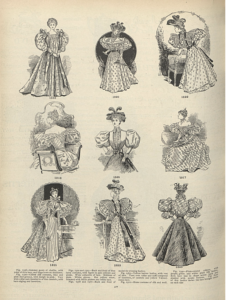
From someone who adores fashion history and understands the importance of Jeanne Paquin as a woman designer in the development of the couture industry and shaping the styles that would define the fashion of that decade, it can be heartbreaking to see a piece that has been altered and reconfigured from its original form. However, it enriches the history of the piece as one can understand that the owner did not want to abandon this bodice and had it re-done to match the fashion aesthetics of the time. Determining the mindset of the owner can be challenging, but through the construction that was done it becomes clear that they just wanted to keep wearing this piece and wanted to keep it in style. It raises another question: would you have altered your Paquin to make it back in fashion or would you have kept the original?
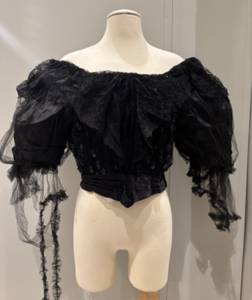
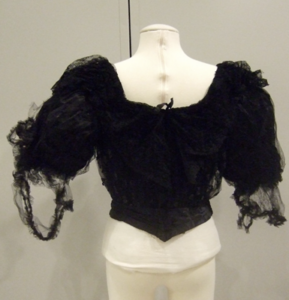
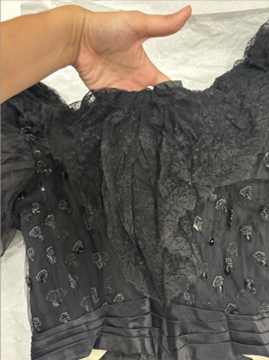
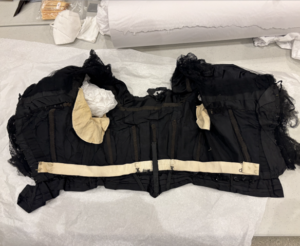
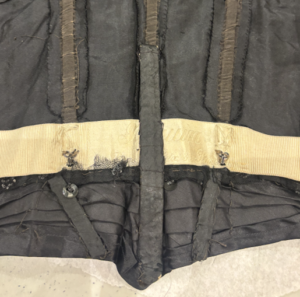
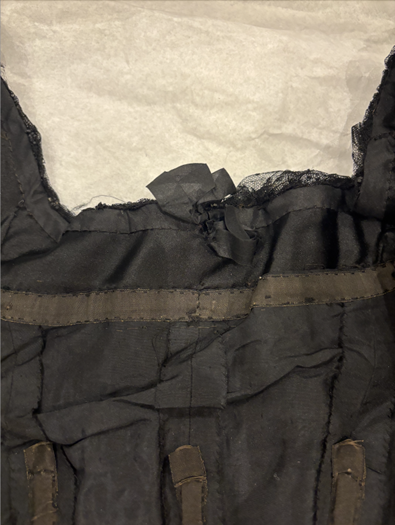
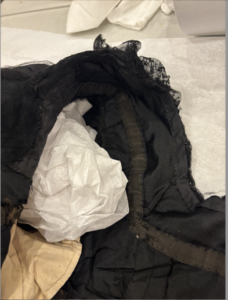
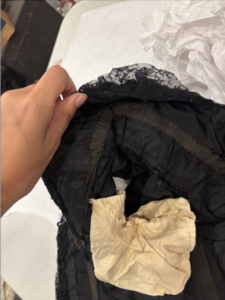
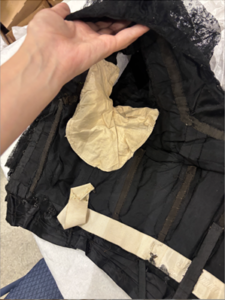
You can follow the original neckline all the way around the sleeves to see where the original shape of the bodice to what it was altered to
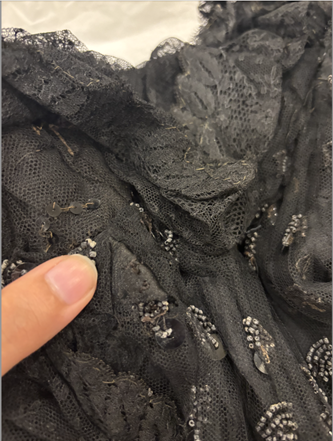
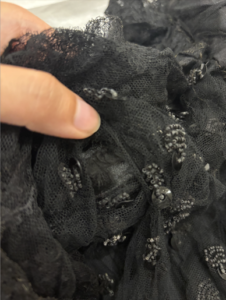
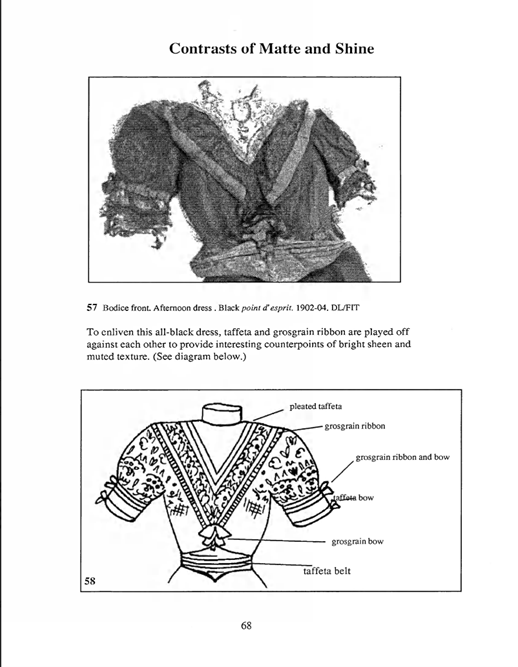
A good comparable image for what the full gown may have looked like after alterations.
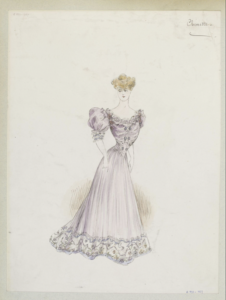
Jeanne Paquin; Paquin Ltd
Paris, France
1904
The Victoria & Albert Museum
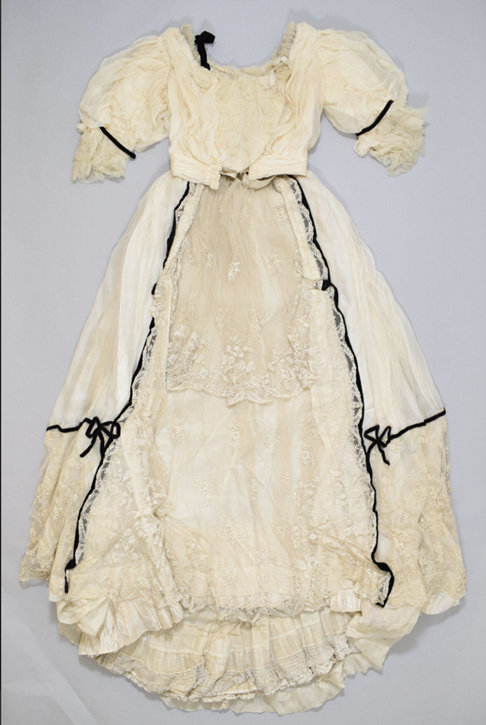
England
1900-1905
The Victoria & Albert Museum
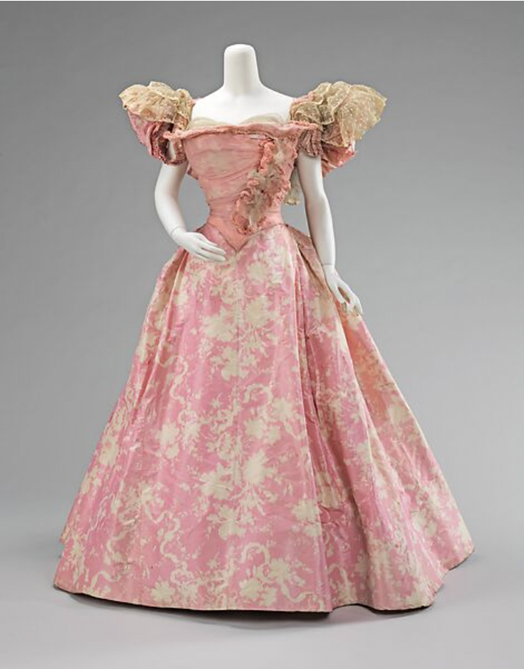
Jeanne Paquin; House of Paquin
France
1895
The Metroplotian Museum of Art
Comparable image of what they gown may have looked like before alterations
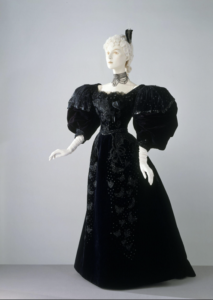
Stern Brothers
New York, USA (retailed); Paris, France (made)
1894
The Victoria & Albert Museum
Comparable image of what they gown may have looked like before alterations