Who was Enslaved at Liberty Hall?: James, Jenny, Phillis, and an Eight-Year-Old Girl
It is impossible to look at slavery at Liberty Hall in isolation. Enslaved people were made to labor at Liberty Hall even if Livingston did not claim ownership over them himself. Such is the case of James who was brought to Liberty Hall by Livingston’s daughter, Catharine Livingston Ridley when she visited from Maryland, where she lived with her husband, Matthew Ridley.
It is unclear when exactly James stayed at Liberty Hall, the labor he performed here, or the relationships he developed. We do know that he was married to a woman named Jenny in Maryland and that they were both middle-aged. By transporting James to Liberty Hall, Ridley separated him from his wife and the rest of his family for an unknown period of time without any way to contact them.
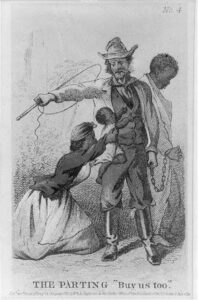
James and Jenny, along with the rest of the people enslaved by Matthew and Catharine Ridley had to face the possibility of a more permanent separation when Matthew Ridley died in 1789. The death of an enslaver was a frightening time for enslaved people, who understood that this meant that they might be sold to pay debts or given as inheritance to different people. We do not know exactly how James, Jenny, and others enslaved by the Ridleys reacted to this potential separation, but it is clear from other enslaved people’s testimonies that families like theirs lived in constant dread of being separated, experienced significant pain when broken apart, and went through great lengths to try to reunify their families.
In the wake of her husband’s death, Catharine Livingston Ridley decided to move to Liberty Hall with her children. She proposed to bring James and Jenny to Liberty Hall with another woman, Phillis, and an eight-year-old girl. By this point, William Livingston had manumitted Bell and Lambert and was reliant on free labor alone. He may have complained about his workers to Ridley because she believed that he would prefer to be served by enslaved people. Despite his moral opposition to slavery, Livingston gave his enthusiastic support and was willing to purchase or lease them from his daughter. Both believed that enslaved workers were better than free white servants and, in this case, his moral opposition to slavery came after this self-interest.
“I shall find it more for my comfort & advantage to have them all than such hired ones as I have hitherto been plagued with”
William Livingston to Catharine Livingston Ridley, February 2, 1790. Massachusetts Historical Society.
Ridley and Livingston were not concerned about the upheaval this would cause James, Jenny, Phillis, and the young girl. Ridley made no reference to the unnamed girl’s parents and was happy to sell or rent her elsewhere if it were more convenient. Ridley planned to hire out all the other people over whom she claimed ownership. Although she hoped to keep families intact, Ridley nevertheless lamented the potential financial loss of doing so, as a single man would reach a higher price than a family with children. It was only her hope that she would receive “future services” that convinced her not to sell young children. Although she paid lip service to the importance of family to the people over whom she claimed ownership, this was only secondary to her financial best interest.
It is ultimately unclear whether James, Jenny, Phillis, and the eight-year-old child were brought to Liberty Hall. Livingston died in July 1790, only a few months after he came to this arrangement with his daughter, and at this time Ridley was still living in Maryland. What became of them and their families is unknown.
By Katherine Quigley, February 2026