In the early 1600s, the British king began establishing colonies in America. By the 1700s, most of the settlements had formed into thirteen British colonies: Connecticut, Delaware, Georgia, Maryland, Massachusetts, New Hampshire, New York, New Jersey, Virginia, North Carolina, Pennsylvania, Rhode Island, and South Carolina.
America 250: Road to Revolution
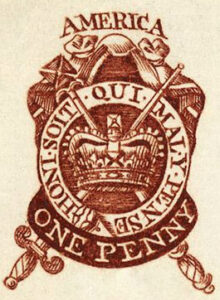
With the conclusion of the costly Seven Years War, also known as the French and Indian War, Great Britain tried to make up for lost revenue and manage new territories. As a result, Great Britain attempted to control the daily life of colonists across the Atlantic Ocean. The Proclamation of 1763 restricted colonists from settling west of the Appalachian Mountains. Additionally, Great Britain began to place heavy taxes, such as the Stamp Act (1765), which placed a tax on paper goods and legal documents, the Townshend Acts (1767) taxing colonists without consent, and the Tea Act (1773), which created a monopoly on tea.
These acts greatly angered colonists and led to boycotts and protest. The most well-known protest is the Boston Tea Party on December 16, 1773, when colonists dressed up as Native Americans, boarded British tea ships and dump thousands of tea bricks into the harbor. As a result, Great Britain passed the Intolerable Acts (1774) a series of acts including revoking the Massachusetts colonial government, closing of the Boston harbor, the Quartering Act (housing British troops in private homes), and the Quebec Act (expanding British territory into the Ohio Valley). From September 5 to October 26, 1774, colonists met in Philadelphia for the First Continental Congress to develop a response to Great Britain, such as boycotting British goods, petitioning to the King, and forming local militias.
War Breaks Out
Tension was high in the American colonies and eventually war broke out on April 19, 1775, with the Battle of Lexington and Concord. By June, George Washington was appointed as commander-in-chief and the inexperienced American soldiers held the British off at the Battle of Bunker Hill. At the same time, William Livingston became the Brigadier General of the New Jersey militia and began corresponding with General George Washington. In November 1775, Great Britain offered one potential path to freedom for enslaved men who were willing to fight for the crown when the royal governor of Virginia, Lord Dunmore, offered freedom to any enslaved people who joined British forces. Although this promise was not fully honored, Black soldiers fought on both sides of the American Revolution.
Duration of War
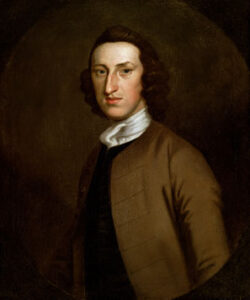
While the war was already ongoing, the American colonists formally declared their independence from Great Britain at the Second Continental Congress on July 4, 1776. Although William Livingston served as a delegate to the congress, he did not sign the Declaration of Independence as he was needed elsewhere. By August 1776, William Livingston retired from military leadership and became the first elected Governor of New Jersey, serving from 1776 until 1790. He still remained involved in the war effort, however, and on October 8, 1777, George Washington wrote to William Livingston requesting him to send a large number of the militia to the New Jersey Highlands to prevent the British from advancing.
From December 1776 until January 1777, George Washington and his troops crossed the Delaware River from New Jersey into Pennsylvania. By crossing the river on Christmas night, the patriots were able to surprise the German forces which helped raise the colonists’ spirits and hopes that the war was winnable.
The Battle of Saratoga (1777) was a major turning point of the war for the Americans. This victory helped boost morale and gained the support from the French. The momentum for the patriots continued and led to the eventual British surrender of Yorktown on October 19, 1781.
End of War
The American Revolution officially ended on September 3, 1783, when the Treaty of Paris was signed between Great Britain and the United States, officially recognizing the United States as an independent nation.
By December 1783, Washington resigned as commander-in-chief in Annapolis, Maryland. Under the Articles of Confederation, the Congress of the Confederation governed a loosely organized union of states with no chief executive from 1783-1789. However, political leaders realized that the Articles of Confederation were weak, leading to the Constitution Convention of 1787.

The Convention adopted a new Constitution which provided for a republic with a much stronger national government in a federal framework, including an effective executive in a check-and-balance system with the judiciary and legislature. William Livingston served on several committees such as Committee on Assumption of State Debts and the Committee on the Slave Trade. The Constitution was ratified in 1788, after a fierce debate in the states over the proposed new government.
A new administration under President George Washington took office in New York in March 1789 and the new bicameral Congress (a legislative system featuring two separate chambers such as the House and Senate) of the United States was created.